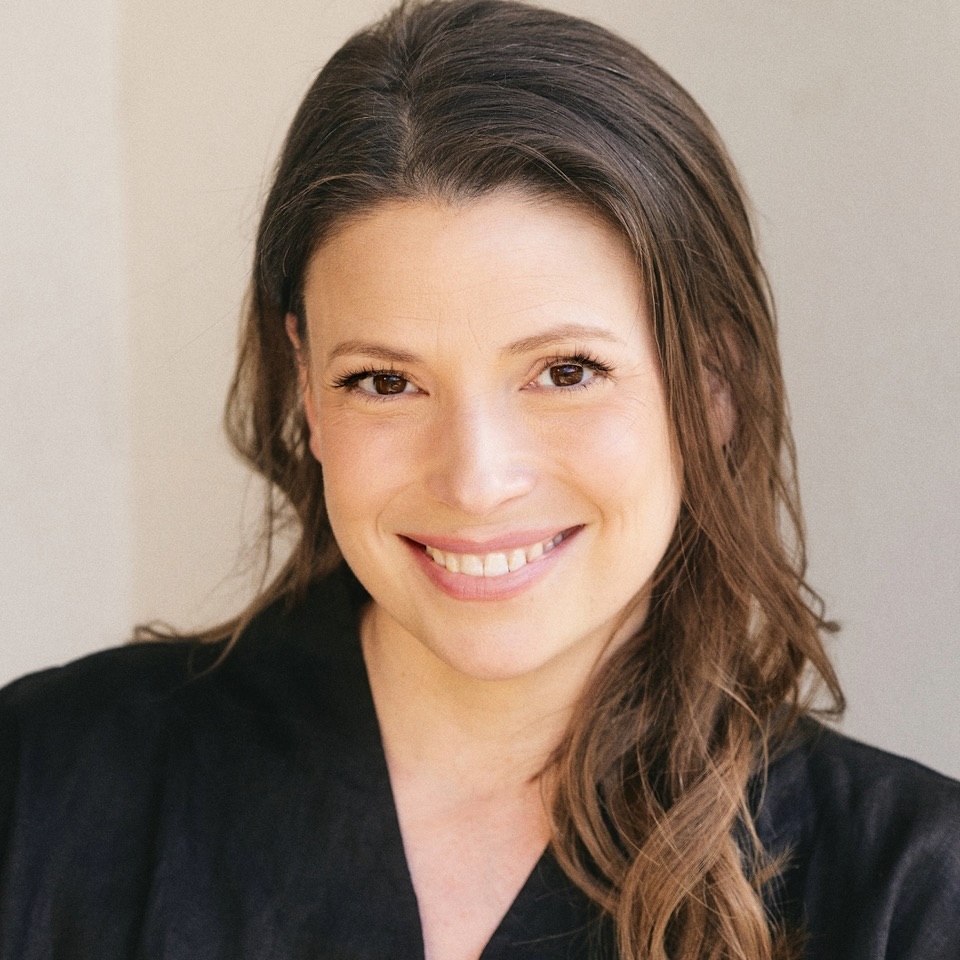
Ever wondered about the voice behind your favorite audiobooks, like Emily Henry or Abby Jimenez novels? Get ready for a fascinating peek behind the curtain with Julia Whelan, often called the “Adele of audiobooks.” She has narrated everything from gripping thrillers to heartwarming romances.
Her talent has brought characters to life in bestsellers like “Gone Girl” and Emily Henry’s beloved rom-coms. In this episode, we’re exploring the captivating world of audiobook narration and the journey from page to earbuds.
Julia shares:
• Her transition from child actor to award-winning narrator,
• The intricate process of preparing for a narration, from character voices to pronunciation guides
• How narrators prepare for different genres and characters
• The challenges and joys of narrating your own novel [she’s an author, too!]
• Julia’s groundbreaking venture, AudioBrary, revolutionizing the audiobook industry
A bit more about Audiobrary: Audiobook narrators typically don’t receive royalties for their work, regardless of how successful the book becomes. Julia’s mission with Audiobrary is to change this industry standard and ensure fair compensation for narrators.
Whether you’re an avid audiobook listener, an aspiring narrator, or simply curious about the process, this episode offers valuable insights into the art and business of audiobook creation. Julia’s passion for storytelling shines through as she shares her experiences and vision for the future of audio publishing.
So plug in your earbuds and join us for an engaging conversation that might just change the way you listen to your next audiobook!
Follow Julia Here
Hop on the Audiobrary newsletter
Transcript
Hi, friends. Welcome to the Life with Loverly podcast. I’m Brittany, a wife, mom, and lifestyle entrepreneur here to help you discover your best daily style and encourage you to try new things when getting dressed each day. I took a tiny following on social media and turned it into a community of over one million amazing women, and I am so glad you’re here. I’ll be sharing my heart with you beyond the 15 seconds on Instagram, so we’ll be diving into things like personal growth, friendships, motherhood, marriage, and of course, the business of blogging. Really, this space is here to serve as your go-to resource to building a life you adore while sprinkling some kindness to others along the way. Grab an iced coffee and let’s do life together. I’m Brittany, and this is the Life With Loverly Podcast. Hi, friends. Welcome back to the Life With Loverly Podcast. I’m so excited for today’s guest. You probably know her voice, even if you don’t know that you know it. Today, I’m joined by the Adele of audiobooks herself, Julia Whelan. She’s narrated everything from thrillers to tearjerkers, from Gone Girl to part of your world. Chances are she’s made you laugh, cry, or cancel your plans just to keep listening to an Emily Henry rom-com. We’re diving into all things storytelling from her early acting days to what it’s like narrating your own novel. Yes, she is an author. If you’ve ever wondered how audiobooks come to life or what it takes to bring a character off the page and into your ears, this one’s for you. Here’s my conversation with Julia Whelan. Hi, friends. Welcome back to today’s episode of the Life with Loverly podcast. I am thrilled to talk to you guys today, and I have Julia Whelan here. She is an audiobook narrator that I’m sure you’ve probably heard her voice read one of your favorite novels in the past. Hi, Julia. How are you?
Julia Whelan (02:02):
I’m good. I’m good. I’m so happy to be here. Thank you for having me.
Brittany Sjogren (02:05):
Yes. I have so many of my favorite books were read to me by you, and I just feel like I have so many questions on just the process. Sure. I think it’s so interesting. Some of my favorite books that you’ve narrated have been pretty much all of the Emily Henry books. Right now, you’re kind of known as the Adele of Audiobooks, which is kind of like a huge compliment.
Julia Whelan (02:33):
Thank you. Thank you, New Yorker for that alliteration.
Brittany Sjogren (02:36):
I love that. Okay, so you were acting before narrating. Tell me a little bit about your acting days.
Julia Whelan (02:43):
Oh gosh, if I can remember that long ago. No, I was a child actor. I’ve been acting since I was nine, I think. Kind of reached the height of my working career and my fame on camera in high school for me. I was on a television show called Once and Again, which was from the guys who did 30-something in my so-called life. And it was what we kind of jokingly called 40-something. It was about divorced parents trying to blend their families. And it was just a great show. It’s unfindable now. It’s only on YouTube. It’s not streaming anywhere, but I feel like the Gen Zers are kind of rediscovering that show for reasons. So it’s weirdly having kind of a cult resurgence, but it was a fantastic show. And the bottom line is it just spoiled me for any other TV or film, frankly. And I left the business to go to college thinking that I would come back to it. I’ve always loved it, but I just wanted to do something else. I wanted to break. And I went to college and got an English and creative writing degree, and then came back to LA fully intending to get my old job back and get back on TV. And that just isn’t what happened. The universe had other plans.
Brittany Sjogren (04:01):
Yeah. Okay. Well, how did you get into narrating?
Julia Whelan (04:06):
I got into narrating because one of my best friends in college, her mother happened to be an audiobook director and producer at an audiobook company. And she’s the one who came up to me at my college graduation and said, “With your particular set of skills, I think this could be something you’d be very good at.” And I had never heard of audiobooks. I just kept being like, “You mean books on tape?” People do that? I didn’t know that was a thing. And so eventually I put together an audiobook demo for her. Again, not knowing what I was doing, but just put a demo together and sent it to her and she gave me two young adult novels to start with. And this was at the time, this was like 2009, 2010. So young adult was booming. It was a big category and they needed younger sounding voices for it. And so the accident of timing of just when I happened to get into this industry was at this moment of the beginnings of that big growth that we’re seeing now.
Brittany Sjogren (05:11):
Yeah. Which I mean, I’m sure looking back, you’re like, wow. Right person, right time, just everything lined up.
Julia Whelan (05:19):
Total accident. And then the experience of actually getting in the booth with those first two books and just feeling like a fish to water, just loving it so much and thinking, oh, she was so right. This is everything that I love in one medium. And it was just happy, happy, happy accident.
Brittany Sjogren (05:39):
Yeah. Talk us through the high level view of recording an audiobook.
Julia Whelan (05:45):
It all starts with an offer. A producer or a publisher will reach out to me with an offer for a book, and that really is just when the dates are that they would need the files by. And I either can make it happen or I can’t. A description of the book because they don’t have the time to wait for me to read it to decide if I want to do it, and I don’t have the time to read it if I’m not going to be recording it. So I just kind of have to trust it and go yes or no. And at that point, once I have the manuscript, I will do a prep read and I will create a word list of words I need to know how to pronounce. Some of those will be totally author invention where it’s like, I just need you to tell me how you want this said. Some of it, sometimes it’s real words. And then I create a character list of all of the speaking characters in the book and any vocal traits that the author gives them, whether that’s accent or tamber, and also any biographical information that I think is important. And once I’ve done the read and I’ve gotten a sense of the voice of the piece, then I will build out the performance from there and figure out what the characters are going to sound like and how they’re going to sound like in relationship to each other. And so by the time I actually get in the booth and start recording, I have a game plan for myself.
Brittany Sjogren (07:08):
How long does it. What is a timeframe from when you get the manuscript and you start building all of this to actually recording and signed, sealed, delivered? What is that timeframe?
Julia Whelan (07:21):
It very much depends on actually the publisher and their production schedule. I’ve done things where I’ve turned it around in a couple of weeks because it’s a crash title. But ideally I’ve got a few months to get the book to. They like to typically have raw audio a couple of months before publication, and they want it finished, totally pickups done, mastered, completely finished at minimum a month before-
Brittany Sjogren (07:50):
Right.
Julia Whelan (07:51):
Publication.
Brittany Sjogren (07:52):
Have there ever been times where you’re reading this and you’re like, “Wait, what did I just read?” Or you’re kind of like, “Hold on, how am I going to say that?”
Julia Whelan (08:02):
That’s where that English degree comes in handy. I always joke about because my alma mater likes to own me and be like, “She’s one of us.” And I’m always like, “You really can hold me up as the only person on earth using their English degree. So why not? Use it if that helps you sell the program to other people, sure.” But yeah, sometimes every book is, it’s reductive to say every book is different, but truly every book is different and they all have challenges that I could not necessarily see coming. And sometimes a book, just the text of it or the story of it or the way it’s told is actually very difficult to translate into audio because let’s say there’s some twist that’s coming and you can’t give it away with your voice, so you have to go neutral on everything else so that you’re not tipping your hand at all. Everything is just, there’s a lot of cognitive work that goes into how am I going to help translate this for the listener?
Brittany Sjogren (09:06):
So when you’re in the booth, are you reading from a script? And then are there things you get stumped on and then have to repeat over and over or can you read it through?
Julia Whelan (09:24):
Oh, that’s a good question. I think at this point, I’ve done-
Brittany Sjogren (09:27):
So many.
Julia Whelan (09:29):
700 audiobooks maybe. Very rarely am I going to get tripped up to that extent where I’m like, okay. But every book, again, every book is different. If a book is deeply emotional, sometimes just the emotional work of a particular scene or I find myself getting caught up and I can’t really let myself go there. The catharsis is not for me, it’s for the listener, so I need to just step back. But that can take some regrouping time. Pronunciations, having multiple, especially foreign pronunciations and something can slow things down. But once you get into the cadence and the voice of a particular book, it flows pretty well. I mean, I think the first day I’m always, every single time without fail, I’ll get into a book and the first day I’ll be like, “Wow, this is going slower than I expected.” And then I remind myself, “Yeah, it’s the first day. You do this with every book. Every book takes longer on the first day.”
Brittany Sjogren (10:26):
I also think it’s just fascinating how you can shift the voice and dialogue, especially if you are narrating just the book alone, but you’re more than one character and more than one female character, and then more than one male character. That’s a fascinating thing to me. I’m always like, how do they practice this accent? And it’s so good.
Julia Whelan (10:49):
Again, I think it’s by doing it. I mean, that’s the unfortunate thing. I would like to take maybe the first couple of years of my career just by. In my dream scenario of having enough money, it would be only to buy those masters back and burn them and pay to have them re-recorded. Because that’s the part that you have to figure out. You’re all figuring it out. I mean, I think there’s also something about, there’s certain performance choices of people. Some people don’t do character voices at all. They just read the book. I think coming from the performance background that I do, I feel like as a reader, I want a fully populated world. But again, depending on the book, if it’s a bigger, broader comedy, I might go larger with it than if it’s a memoir. I’m not going to do a lot of character voices in a memoir. So again, it’s just finding the tone of the book and serving it to the best of my ability.
Brittany Sjogren (11:47):
I feel like a Kristen Hannah tone is going to be different than an Abby Jimenez tone.
Julia Whelan (11:52):
Yes.
Brittany Sjogren (11:52):
Yeah,
Julia Whelan (11:52):
Exactly.
Brittany Sjogren (11:53):
And you can kind of get that, which is brilliant that you’ve got that ability, but I definitely see where you’d have to shift, especially even to the author, you probably have more flexibility within what they write and how you can have that tone.
Julia Whelan (12:08):
Yes, that’s very true. And I think that’s where the longstanding collaborations that I’ve had in my life with Taylor Jenkins-Reed or with Emily Henry, where when I get on book six or seven of theirs, wherever we’re at now, having that institutional knowledge of what have I done before and how do I want to switch it up for this book? How do I see? For instance, with Emily’s last book, I won’t say it’s a departure for her, but it’s definitely an expansion. It goes into territory that she hasn’t shown us before. Totally. So I’m going to shift my voice a little bit for that to acknowledge that we’re doing something different here.
Brittany Sjogren (12:47):
Right. Yeah, that was a fascinating book too. Okay, so you narrated Gone Girl. What was that process like to get into character for a psychological thriller like that?
Julia Whelan (13:00):
What’s funny about that book is I think that was the first, it might not have been the first adult book I had done, but it was definitely the first very dark book I had done. And I still had, at that time, a little bit of child actor reputation on me. People still predominantly knew me mostly for my child actor work, which I think is honestly why I was cast because that character had that, she was amazing Amy. She was the basis for these. And so you don’t expect it from –
Brittany Sjogren (13:31):
Totally.
Julia Whelan (13:32):
That character. And I really think I was there to serve that purpose. And still to this day, that’s probably the most fun two days I’ve ever had in the booth because I mean, playing a psychopath is a great time. It’s so much fun.
Brittany Sjogren (13:50):
Also, it’s kind of something you’re not going to just normally do, but you get to get into character.
Julia Whelan (13:56):
And the writing was so good. Her writing is just so good. And especially at that time, it didn’t feel like we. It was the first kind of domestic thriller that I had seen, and it was literary mystery, which was also a world I had not had a lot of exposure to. And it’s so funny. I think people forget how funny that book is because she’s so crazy. Yeah.
Brittany Sjogren (14:22):
There were so many parts that you’re like, “Oh wait, what?” And then you’re like, “That tracks, but oh my gosh, I can imagine just how wild the emotions of being her.
Julia Whelan (14:36):
Yeah, no, it was great. And I think it’s really interesting how many people have told me that that book was their first audiobook, because I think it was a perfect confluence of that kind of. How many books come along that are the book everyone’s talking about? That kind of cultural phenomenon happened to coincide with the beginning of Audible being something accessible to people. I think it was like, oh, I could try this. I could just put it on my phone and plug it into my car and I could listen to this book that everyone’s talking about. And I listen back now and my voice is so different. It was 15 years ago, 13 years ago now, and all those books later, and there’s just a lot of miles on my voice now. But I love that book so much, and that character was such a thrill.
Brittany Sjogren (15:32):
Yeah. Okay. So you have received a Gracie Award for Best Fiction Narrator, which is so exciting.
Julia Whelan (15:41):
Thank you.
Brittany Sjogren (15:42):
Tell me what that means to you.
Julia Whelan (15:46):
Here’s what it means to me, and I’m trying to figure out a way to say this that doesn’t sound jaded in any way, but I’ve been doing this long enough and I’ve had such great books in my life that I have been very lucky with the awards and accolades that I’ve received. And so there’s a part of this that just, it feels like an embarrassment of riches a little bit where I’m like, give it to the next guy. Give it to the guy who’s like it’ll help them raise their rates and sell themselves more. But with the Gracie Award specifically, what I really was moved by with that is that it comes out of the Alliance for Women in Media Foundation, and they’ve been giving these awards out for 50 years named for Gracie Allen legend. And it’s the first year that they had audiobook categories. And to me, that just shows how much audiobooks are becoming a part of the larger media landscape and aren’t just relegated anymore to the redheaded stepchild of publishing. And so that felt like a very big moment, not just for my career, but just for audiobooks in general to be included in the way we talk about podcasts and broadcast and documentary and scripted and TV and film and all of that. It was a kind of watershed moment, frankly.
Brittany Sjogren (17:05):
Totally. But I mean, such a great accomplishment. And it really goes back to all of the years that you’ve been doing this and when you got in as audiobooks were really starting to take off. It feels like you are a really great candidate and obviously recipient for the first one.
Julia Whelan (17:24):
Well, thank you. And I do think it was, I mean, they could have given it to a celebrity. You know what I mean? They could have given it to Meryl Streep reading something. So I was very honored and I think it was because I’ve always felt like a yeoman middle-class narrator. No one is in this for the fame or the fortune because that doesn’t exist. So when we are recognized for the performance, it’s just nice when it’s really for a body of work. It’s for a career.
Brittany Sjogren (17:54):
Well, I think too, as a listener, listeners get so connected to the characters in books and audiobooks, and knowing that your voice is that vessel to the listener, that has to make you feel good when people are like, “This book was amazing. I felt so connected.” And a lot of that I feel like is they’re connected to your voice and how you portrayed the character.
Julia Whelan (18:22):
It’s a weird, I have to say, and again, I think it’s because it’s compared to other forms of acting. So when you’re doing theater, you have immediate feedback from an audience. When you’re on set, even though you don’t have the viewer yet, but you’ve got 35 people on a set. I can see if the camera guy is getting moved or if he’s yawning or whatever. So I have some immediate feedback. With this job, I don’t. And so I’m alone, recording alone. These files are going out to a proofer. They’re sending them back to me for any corrections or pickups. And then it can be three months before I ever start hearing from listeners. And so when I feel that when someone sends me a message about that, it is such a good reminder that there is another human being on the other side of this. And it’s an incredibly intimate experience to have someone’s voice in your ear. And I think that became very clear during the pandemic, especially those early months where I would get emails from people saying, “You’re the only voice I’ve heard for three weeks or something.” It’s a real privilege, honestly, to be able to connect with people on that level.
Brittany Sjogren (19:36):
Totally. And I feel like there’s probably times you can just get in the zone and not even realize how many people are feeling that about your voices that you’re narrating.
Julia Whelan (19:50):
Because I don’t have, and again, as a narrator, this is part of my issue with the business at large is I don’t have any access to data of how many units are sold, how well these things are doing. It’s like vibes. Have my DMs gone up today? That’s it. And there are certain books, I mean, I’m just feeling this right now with Atmosphere, with Taylor’s most recent book that just came out. And I’m getting the same type of message from people. And again, that’s just the aggregate of what is the response to this book and to the performance. And I love it when there’s a common thread, when the same thing is touching so many different people. That feels like an accomplishment, like a job well done.
Brittany Sjogren (20:34):
Yeah. And I’m sure it kind of sucks that you have to wait so long for. It’s like you’ve recorded that so long ago and now you’re like, “Crickets, hope people like that.” And then it probably feels like, okay, it looks like –
Julia Whelan (20:47):
You know, I mean, look, Hollywood is glacial, publishing is glacial. I’m just used to working under those conditions. I don’t bring cookies to a farmer’s market and sell them every. These systems are so dragged down and long, so I’m used to that.
Brittany Sjogren (21:06):
Well, it’s funny because I was telling one of the girls on my podcast team, I was like, “If I don’t have a book to read or I’m just like, what should I read next?” I will literally search your name on Audible and just be like, “What has she read that I haven’t listened to yet?” And then I’ll start reading the description. I’m like, “Okay, great.” So then I save all of these Julia narrated books. I’m like, “That’s how I pick the next one I want to listen to.” Oh, that’s right. Thank you. Who do I want to hear? Okay. Do you hear the character’s voices in your head as you write them almost like you’re already kind of narrating when you are writing?
Julia Whelan (21:47):
Oh. Oh, no. This is so embarrassing.
Brittany Sjogren (21:54):
Yeah.
Julia Whelan (22:01):
No, because first and foremost, I’m a writer, but I’m also a visual reader. I listen to audiobooks obviously, but my go-to is just reading. And so I don’t think of this stuff until embarrassingly late in the process. I got into the booth with Thank You for Listening. My second book, not having yet figured out what one of the characters was going to sound like. And it was like, “You need to be better than this.” If it were someone else’s book, you would’ve figured this out weeks ago.
Brittany Sjogren (22:39):
But with your own, you’re probably like, “Oh yeah, hold on, that stuff is important.”
Julia Whelan (22:41):
I was busy. I was focused on some other things. But yeah, I don’t. Again, the difference being with Casanova LLC with the third project, because it was being written specifically for specific people for all of us to do together. So I very much had their voices in my head while I was writing. But no, when I’m left to my own devices, no.
Brittany Sjogren (23:03):
It’s just like. Well, and as I’m saying this question out loud, I’m like, if I’m just reading a book, how are they sounding in my head when I’m reading? I feel like I need to pay attention to that because I don’t know if I necessarily have characters.
Julia Whelan (23:19):
You might think about how they look, but are you thinking about how they sound? It’s a good question.
Brittany Sjogren (23:24):
I don’t know. I need to pay attention to that in my next book.
Julia Whelan (23:28):
I mean, I know that when I read for pleasure, which is very rare, very rare, but let’s say not even pleasure, let’s just say for work. If I’m reading a book or to blurb a book for an author, it will take me about 50 pages to remember I don’t have to prep it. I’m not thinking about how I’m going to perform it. I’m just reading the book. And so at that point, I will just shut off that part of my brain that’s trying to figure out what are they going to sound like.
Brittany Sjogren (23:55):
Right.
Julia Whelan (23:56):
Yeah.
Brittany Sjogren (23:57):
Yeah. It’s so interesting. So does your experience as an audiobook narrator influence the way you write dialogue or structure a story?
Julia Whelan (24:09):
I think that has definitely had an impact. I always say that coming out of a creative writing program, the thing that this job gave me was it de-snobbed me. So I learned against the wishes of that program that there’s good writing across all category and genre. And then I was like, oh, I was lied to. I thought only specific people could write good books. And so I became a voracious genre reader after that awakening. And in recording these books across all genres that I wouldn’t have never picked up on my own, but it’s just in my inbox. So here’s your assignment, go read it. When you’re recording a book and you can’t skip ahead, as readers, we will often do the thing where we see three pages of description coming up and we’re like, “I’m just going to skip.” Well, I can’t do that. So you learn a lot about pacing and what needs to be there and what doesn’t need to be there. And when something feels like it’s just sagging, and it’s then my job in the booth to bring energy to it and try to prop it up, but you learn a lot about what doesn’t work. And in dialogue too. I think for me coming from, again, the acting background and just living in dialogue, that part was easiest for me because I was a screenwriter before any of this. But yeah, a lot of people don’t have an ear for it. They’ll write it, but I was like, “Did you say this out loud before you actually sent it off to your publisher?” This is just awkward. I’m doing my best.
Brittany Sjogren (25:54):
This isn’t going to sound good.
Julia Whelan (25:56):
Yeah.
Brittany Sjogren (25:57):
We’re really trying hard here.
Julia Whelan (26:00):
Yes. But that’s why someone like Emily, where I just, I mean, if she weren’t writing novels, she would be Nora Efren. She’d be our Nora Efren. She would be writing rom-coms if that market actually existed for original film rom-coms because she just has an ear for it. She’s brilliant.
Brittany Sjogren (26:19):
I know. I love her work. Okay, so you’ve obviously narrated some of your own work. What is that like knowing you are saying your words out loud compared to somebody else’s words?
Julia Whelan (26:33):
So the first book with my Oxford Year, it was actually pretty scarring. I did not enjoy that process, mainly because I was having such debut novelist imposter syndrome anyway. And then when I had to get in the booth and record it, I couldn’t turn off my editorial brain. So I was just like, who wrote this? I wanted to rework every sentence in that book. Thank you for listening with a much smoother experience. It was more fun. I had read it aloud at every draft so that I felt very comfortable with just the book. Like I said, I might not have made certain character decisions, but I felt very comfortable with the book beforehand. And I’m very curious to start doing this again. I’m about ready to start writing again. And I’m now going to ask myself this question as I’m going. Am I hearing these characters as I’m doing it? I’m intrigued.
Brittany Sjogren (27:30):
Yeah, that’s a good one. Okay, so tell me about Audio Brewery.
Julia Whelan (27:36):
Yeah. Yes. Thank you.
Brittany Sjogren (27:38):
Fascinating. I want to hear more and talk more about what this is.
Julia Whelan (27:44):
So Audio Brewery is my attempt to try to fix some things that I find untenable about the audio publishing business having been in it now for 15 years. A couple of things. So my villain origin story is that narrators don’t get royalties, which is something that most listeners don’t know and many authors don’t actually know. And it was one thing when audiobooks were kind of smaller, they were being done mostly for a library market and there wasn’t a lot of money in it. But now we know. We know how much money is in it. And our rates going into it, just our flat session fees are not that much. That’s why I used to have to do 70 books a year to just pay my bills. And in the case of success, which is what publishing is built on, there’s a bottom. Someone gives you an advance and then you can’t start getting royalties until it earns out. But if it earns out and if it’s successful and it’s making money, everyone’s making money. The author’s making money, the agent’s making money, the publisher’s making money, the distribution outlets, the retailers are making money, but not the narrator.
Brittany Sjogren (28:56):
Right.
Julia Whelan (28:57):
And as an on-camera actor who still gets residuals from lifetime movies I did when I was 12, I just could never get my head around this. So after asking the Big Five to fix this for years and just being told the corporate bottom line of, well, that’s just not how it’s done and no one does that, I though, well then I’m going to do it so that you can’t tell me no one does it anymore. So I started an audio publishing company. We are also a direct-to-consumer retailer. Okay. All of our projects are available everywhere you get audiobooks. But when you buy them directly through Audio Brewery, we have bonus features, at least an interview with the author, sometimes more. You can also rent them. I created a rental model so that you can rent audiobooks for a week for a third of the retail price if you want.
Brittany Sjogren (29:49):
That’s actually so brilliant.
Julia Whelan (29:51):
Yeah, thank you. I could never understand again why that didn’t exist.
Brittany Sjogren (29:55):
Especially for people who are banging out books.
Julia Whelan (29:57):
And it’s It’s basically taking a library sort of model, but without the queue. And even when you rent, because in audiobooks, and this is just, I don’t entirely know how this happened, this is above my pay grade, but the retailers, particularly Audible, let’s be honest, take so much off the top more than any other digital media. And they are making hands over fists on all of these books and it’s punishing the publisher and the author and obviously the narrator’s not getting anything. So I just try to explain to people that please go get it on. If it’s in your system and you can use a credit for it, absolutely go use it. But if you have the discretionary income and you can buy it from us directly, it makes a world of difference to the author and the narrators.
Brittany Sjogren (30:51):
So is there an app?
Julia Whelan (30:54):
Yes. So you go to audioburry.com is the website. You purchase or rent through the website, and then it goes immediately into the Audiobury app. We have our own projects. We have, gosh, I’ve lost count now, but we’ve been doing this a year and a half and I think we have about 20 or so of our own projects, but we are also starting to open the platform up to people who are coming to us with finished audio, who just want to put it on there as a retail site. We can also handle distribution wide for people who come to us if they want to make sure their narrators are getting royalties. And so we’re building out this collection. I don’t ever intend for it. I mean, famous last words, but I’m really not trying to be audible here and put every book ever.
Brittany Sjogren (31:44):
Yeah. Yes.
Julia Whelan (31:45):
It’s a curated collection of projects that interest me that I think are quality projects and that really support the creators. That’s the point.
Brittany Sjogren (31:58):
Wow. And you work with your husband on this?
Julia Whelan (32:03):
Yeah, so I roped him into this.
Brittany Sjogren (32:06):
I feel that.
Julia Whelan (32:07):
Yeah. Yeah. Poor guy. He was going to retire and then I was like, “Or we could start a tech company.” So this is on me. But yeah, he saw how frustrated I was getting and how burned out I was getting. And he comes from a Hollywood entertainment background. And so for him, it was just egregious, the money that was being left on the table here and that the artists were not getting. I mean, it’s just been something that he’s like, “Let me adhere kind of thing.” So he did not need much convincing to do this, except that I said, “I love this job so much and under normal circumstances,” because this is kind of what I did in my Hollywood days is I got frustrated with Hollywood. I felt like there was no way for me to be me in that industry. Everyone wanted me to be a very specific version of something. And I threw up my hands and walked away because it was unfixable from me. From little me, I don’t have the money and I don’t have the power to fix it. In this, I had built this reputation in this industry. I had built trust with listeners in this industry, and I really did have something to leverage my reputation. And I thought it was worth it. If this all doesn’t work, I will at least know that I tried. I tried to do everything I could. And that’s all I wanted at this point. I couldn’t keep just being angry about this.
Brittany Sjogren (33:41):
Right. Well, and now it’s like when you were a kid, you couldn’t fight back or do certain things, but now it’s like, hold on, I can. I can make changes.
Julia Whelan (33:54):
I was having this conversation a couple years ago. One of my best friends from college and my best friend from childhood came out here. I live in the California desert, very near Coachella, and they came out to go to Stagecoach with me just because why not? And my friend from college is now a therapist, and I was explaining my frustration here, and I was like, “I think I’m just done. I think I’m going to write full-time. I’m going to miss it. And it angers me that I don’t get to do the thing I love and that the listeners don’t get to have this thing that they love that I do just because I’m so frustrated with the business, but I got to leave.” And she looked at me and she was like, “So you’re going to do it again. You’re going to walk away from something again.” And she’s like, “Except this time, you might actually have the ability to move the needle.” And she’s like, “How do you feel about that?” I was like, “Don’t shrink me.” I was like, “We’re going to go drink beer and listen to country music. Shut up.”
Brittany Sjogren (34:44):
You’re like, “You’re supposed to be on my side right now.
Julia Whelan (34:48):
Stop giving me a job.” But that was really a turning point because it kind of crystallized that this is not the same thing this time around. This is not the same situation. You could try.
Brittany Sjogren (35:02):
Yeah. Well, that’s really cool. I’m definitely going to check this out because I was talking with Meg beforehand and we were just talking about what it was. And there were so many points that she was like, “Wait, this is really cool. Did you know this? Did you know this?” And I just feel like people don’t even know.
Julia Whelan (35:21):
No, and we’re starting. So I worked for a little piece of my history that I think people don’t also know is that in 2018 to 2020, I actually was head of production at an audio app, a startup called Autumn, which put long-form journalism on audio. And I started as a narrator for them. And then when they got a seed round, I was their first hire to run production. And we scaled that company to acquisition by the New York Times in 2020. And I had said at the time, never doing this again. I loved them. I loved the project. I loved what we were doing. I believed in what we were doing, but I was like, never ever again will I get into tech. Will I run any of. No.
Brittany Sjogren (36:05):
Famous last words.
Julia Whelan (36:06):
Famous last words, because man, when you believe in something –
Brittany Sjogren (36:10):
I know.
Julia Whelan (36:11):
But what I will not do, and this is the promise that I made to myself and to my husband, is I’m not going to get sucked into that startup trap of growth at all costs, just growth, growth, growth for growth’s sake. So we’ve been doing this a year and a half. We have done it at the pace that we find just barely sustainable. It’s a lot.
Brittany Sjogren (36:34):
You’re like, “This is what we can handle.”
Julia Whelan (36:35):
But yeah, but I’m not going to take money yet because I don’t want it to become someone else’s thing or for them to turn it into something it wasn’t meant to be. And so this is what we can do. This is the speed at which we’re doing it. And I look back and I’m like, “We actually have done a lot in the last year and a half.” But now it’s getting the message out and it’s time to invite people into it to let them know why I’m doing this and what this is. And now that we’ve got our feet under us.
Brittany Sjogren (37:06):
Totally. Well, and it’s interesting just hearing you talk about your past and not wanting to repeat your past. One thing I kept thinking was it’s so interesting because you’ve learned so much from those experiences in your past, and now you’re doing this at a sustainable pace, not at the pace that you did for that other company. And I think that just shows growth and maturity as a human. And it’s kind of like, okay, kind of want to pat yourself on the back for the growth.
Julia Whelan (37:38):
Thank you. I mean, I knew that it’s like having a kid. I knew that the first two years, three years were going to be. You can’t look away for more than 10 seconds or it’s going to hurt itself. That’s the job. And I knew that these were always going to be the hard years. But I am very, very clear on what I want and what I don’t want. And what the whole point is, I was saying the other day, because someone said, “Will you produce an audiobook for us?” Someone was asking if I could just run production on an audiobook. And I was like, “Yeah, of course I can. And then we can also distribute it for you if you would like.” But I would’ve never put my savings in jeopardy, my husband’s health and our life into this just to create something that already existed. There are plenty of good audio production companies. So this had to be for something.
Brittany Sjogren (38:36):
Right. Yeah, a little bit more, which is great. And it’s great that you have those convictions and want to stick to that. I think that’s also where business owners or people who start companies, they just are like, “Oh, well, okay, I’ll shift and go that way.” And next thing you know, they’re not even following their own vision.
Julia Whelan (38:54):
I think that’s the thing. I mean, I was always from the beginning going, “Okay, we’ll get a membership together eventually.” I mean, the pressure of at that point having enough content to support a membership, if I’m going to take $15 a month from people, God, we better have a lot of content. And luckily, instead of following through with that, which was just because that’s the way other companies do it in this industry, we had some talks with some of our very loyal fans and customers. And whenever Jeff would get someone on the phone for an IT issue, he would just be like, “Hey, I have a question for you. What would you like to see from…” And just have these conversations with people, the user conversations. And they’re the ones who said, “Please do not do another membership. We’re so burned out on memberships, and that’s where rentals came from.”
Brittany Sjogren (39:40):
Right. I mean, the rentals is just brilliant.
Julia Whelan (39:43):
Yeah. And so the next few months is going to be another period of really massive growth in terms of the products that we are able to offer, the projects that are going to be coming to the platform. But it feels like the infrastructure’s there now. The foundation is there now.
Brittany Sjogren (40:02):
Totally.
Julia Whelan (40:02):
And we’re just going to, I don’t know, we’re doing it the way we want to do it and we’ll see if it works, but so far so good.
Brittany Sjogren (40:09):
That’s great. Okay, switching gears a little bit, are there any books that you would love to narrate but haven’t yet? Or any types of books?
Julia Whelan (40:19):
Oh, yeah. Yeah, there are a couple of them I don’t want to say publicly because I’m actively trying to figure out how I could get the rights to them. But in terms of the classics, no one is ever going to ask me to narrate Middle March because it’s British, but it’s my favorite book. And I might just –
Brittany Sjogren (40:37):
You’re like, “Can I just somehow?”
Julia Whelan (40:38):
Yeah, I might just do it. Now, especially with Audiobury, I might just do it. But the problem is it’s such a long book. It’s so long and I don’t have the time.
Brittany Sjogren (40:46):
Where can I fit this in my schedule?
Julia Whelan (40:49):
Yeah. I think there’s authors that I would love to work for that I haven’t yet. And so I think it’s more about anything that they would write.
Brittany Sjogren (41:00):
Yeah. Is there ever this courting phase between like, “Hey, I really want to work with you. This is who I am.” Or you ever directly talking with an author, just being, I don’t know, sliding into their DMs, being like, “Let me read this.”
Julia Whelan (41:19):
Yes. Well, I mean, especially since the Audiobury project started, I’m a little bit more proactive. And in fact, I did that. One of our first projects, maybe our fourth or fifth book was someone who I found on TikTok. I hate giving TikTok credit for anything, but the algorithm just put her in my past. Came your way. And it’s an incredible book, and she ended up doing very well with it. She ended up selling it in multiple territories and just sold domestic rights as well. They actually just changed the title because now that it’s traditionally published, it went from being called La Vie to Guenavere to The Once in Future Queen. And so yes, I will proactively now reach out to people, but there are always authors in my mix who are like, “God, I really want to write something for you.” And we’re always working on something.
Brittany Sjogren (42:13):
I think that’s got to be so cool to have an author be like, “I want to write a book that you can read.” You know what I mean? That feels like a huge compliment that your voice is what authors want their characters to sound like.
Julia Whelan (42:27):
Yeah, it really is. And I love that. Actually, a book that just came out today called These Summer Storms by Sarah McLean. Sarah had said, “You were on my vision board for this book.” So cool. And I’ve gotten that a few times where authors have said, “I wrote this. I heard your voice when I was writing this.” Addie LaRue was like that too for V.
Brittany Sjogren (42:50):
That’s awesome. That’s got to be a few pinching moments.
Julia Whelan (42:53):
It’s very flattering. It’s very flattering. And I do respect that. When those offers come through and an author is telling me, “I really did write this with your voice in my mind,” it means something for sure.
Brittany Sjogren (43:07):
Totally. Yeah. Okay. I have a few rapid fire questions and then we’re going to wrap this up.
Julia Whelan (43:13):
Okay.
Brittany Sjogren (43:13):
Okay. Has fashion ever played a role in your characters or your prep?
Julia Whelan (43:19):
Fashion is a very important part of understanding who a character is. I really appreciate those descriptions in books. I tend to forget about it when I’m doing the writing, but man, when I am reading it, fashion will tell me so much about what I need to know about a character. So I would say that actually now that I’m saying that, I think an exception is that in my first book in my Oxford year, I used clothing to get a cultural difference between Americans and Brits and a specific type of upscale British wardrobe of tailoring and quality material and good hand and that heft. And it’s atmosphere as much as anything else.
Brittany Sjogren (44:07):
What would the title of your audiobook memoir be?
Julia Whelan (44:12):
Well, I already used Thank You for Listening. So I would actually, the working title for Thank You for Listening was Punch and Roll. And that is a inside terminology for a type of recording style that we do. And I could just never find a way in the book to shoehorn in an explanation for what punch and roll is. But punch and roll in terms of this career, it punches you roll.
Brittany Sjogren (44:42):
Okay. Your favorite recent read. It could be audio or print.
Julia Whelan (44:49):
There’s a book that just came out. I have to take anything I recorded off the table. I’m just going to say that because otherwise I’m playing favorites and I don’t want to do that. But there’s a book that just came out called Finding Grace by Loretta Rothchild, and it is fantastic. First of all, one of those openings that you only get occasionally just –
Brittany Sjogren (45:14):
Blows you away.
Julia Whelan (45:16):
Blows you away and keeps you reading, and it’s lovely. So I think about that book a lot.
Brittany Sjogren (45:21):
Do you have favorite narrators that you like listening to?
Julia Whelan (45:25):
Oh, sure. Sure. I love Eduardo Ballerini. I love Dion Graham. I love Sonila Nancani. Hillary Huber, Vikas Adam.
Brittany Sjogren (45:39):
Yeah.
Julia Whelan (45:39):
Yeah, I could keep going.
Brittany Sjogren (45:40):
Yeah.
Julia Whelan (45:41):
I mean, a lot of the romance narrators as well just know exactly what they’re doing.
Brittany Sjogren (45:47):
Yeah.
Julia Whelan (45:47):
They’re good.
Brittany Sjogren (45:48):
I love it. Okay. What’s your guilty pleasure listen?
Julia Whelan (45:52):
Well, we already established country music. So yeah, the trashier, the truckier, the flat of beerier, the better. I love it. I have what I would say cerebral country. That’s my jam, but sometimes I just want that beer in truck and Daisy Dukes Country.
Brittany Sjogren (46:10):
My best friend is the same way. It’s so funny because she knows every word to these songs. And my husband’s always like, “Oh, it’s some beer truck boot song that she’s listening to again.” I’m like, “Yes.”
Julia Whelan (46:27):
Here’s the thing. In my defense, it’s all story.
Brittany Sjogren (46:29):
I know.
Julia Whelan (46:29):
That’s what country music does really well is it tells a story.
Brittany Sjogren (46:33):
I agree. I hear a song and I feel like the picture has been painted. You just visualize the situation.
Julia Whelan (46:43):
I will read country lyrics the way other people read poetry. Because seriously, when I’m in a writing mode and I don’t want to read a book, I don’t want any other narrative in my head, but I will listen to music and then I will go and read lyrics because I just love the way people organize thoughts and feelings and somehow magically make us –
Brittany Sjogren (47:04):
Make a song.
Julia Whelan (47:04):
Have an experience.
Brittany Sjogren (47:05):
Yeah, it’s so true. Okay. Are you a coffee shop or comfort of your own home person for reading?
Julia Whelan (47:13):
Oh, I’m a homebody.
Brittany Sjogren (47:15):
Yeah, same.
Julia Whelan (47:16):
The outside, it’s too peoplely.
Brittany Sjogren (47:18):
Right? I can’t focus enough on get out.
Julia Whelan (47:22):
No.
Brittany Sjogren (47:24):
Okay. We wrap up all of our episodes asking the same question, and it is what is the most meaningful act of kindness that somebody has extended to you that has had a lasting impact on your life?
Julia Whelan (47:37):
It’s such a cop out to say my husband, but I’m going to say it because it’s actually in a business capacity, not just a personal capacity. And it was when I was at this crossroads of, do I leave? Do I just go in a totally different direction? Do I stay in this? And I’m someone who has always supported myself, always. Never took money from after the age of 12, never took money from anyone. And he came to me when I was like, “I don’t know. I don’t know how I’m going to feel about if I’m not making money.” And he just had such. And it wasn’t like, “What’s mine is yours.” It wasn’t that feeling. It was just, “We’re going to figure it out. You’re a smart person. I’m a smart person. We will survive this, and you need to be true to you, and don’t make this about the money.” And I don’t know if that’s kindness, but it’s certainly prioritizing your partner’s mental health and what they want out of their life and just saying, “You do whatever you want to do, and we will handle it. We’ll metabolize it.” And that has had long-lasting now rippling effect of I just finally was able to put that burden down for the first time in my life. And it was very freeing.
Brittany Sjogren (49:13):
Yeah, totally. I get that. My husband and I worked together too, and I remember when he left his corporate job to come work with me full-time. And just now that I’m thinking about this, I’m like, “Maybe I haven’t even really told him how much that really meant to me and how some very selfless acts that he was like, okay, I’m putting your desires above my desire to expand my career. Now I will leave that and just focus on what you are doing and we will grow this together.” But it really takes somebody being really selfless and extending that.
Julia Whelan (49:56):
It really does. And like I said, because he’s older, and I wasn’t kidding that I had been nagging him to retire for years, and then instead to be like, “Actually, we could work 18 hours a day on this. How does that sound?” And to have that kind of confidence and someone not just saying, “Don’t worry, babe, I got you. I’ll give you spending money.” No, I’m going to actually put my entire being, my time, the few minutes I have potentially left on this earth into this endeavor if this is what makes you feel better.
Brittany Sjogren (50:34):
Yeah.
Julia Whelan (50:34):
It’s huge.
Brittany Sjogren (50:37):
Yeah. No, that’s great. That’s definitely something to –
Julia Whelan (50:40):
Like I said, I’m not sure it’s kindness, but it was revelatory.
Brittany Sjogren (50:45):
Yeah, I love it. Well, Julia, tell us where our listeners can find you and follow along with you on Instagram. I love following along with you. I feel like I’ve learned so much about the audiobook world from just some of your reels and things that are going on.
Julia Whelan (51:04):
Oh, thank you.
Brittany Sjogren (51:05):
So it’s always kind of fun.
Julia Whelan (51:05):
Yeah, Instagram is the best option. I am on TikTok, except I’m not very good at the creating the content thing endlessly. So I am there, but I don’t think you would miss anything if you weren’t following me on TikTok. And yeah, check out Audiobury, sign up for a newsletter. Another thing that I’ve been very particular about is we only send out emails when we actually have a new project to launch. I don’t have a whole email marketing thing, so you’re not going to get spammed. So that’s a good way to find out what’s going on because I use that as kind of a hybrid new releases, but also any news that’s fit to print about upcoming stuff or classes I’m teaching or anything like that.
Brittany Sjogren (51:49):
It’s perfect. And we’ll leave all of that in the show notes so you guys can just easily click over and check all that out. Well, Julia, I really appreciate your time today. Thanks for joining.
Julia Whelan (52:00):
Thank you. Thank you for having me.
Brittany Sjogren (52:02):
All right, friends, until next time. Hi, friend. If you’re loving the show, will you go find that follow button on your podcast app? This will ensure that you won’t miss a single episode. I love having you in this community. Until next time. This season of Life with Loverly is produced by Elizabeth Evans Media Productions.